A Pillow Book of an “Idle” Thanksgiving:
Comparing Persistent Gender Roles and the Significance of Food Across Japanese History and in the Modern U.S.
Ethan Diamondstein - December 2025
Introduction and Project Impetus
“One yearns for the old world in every way,” and still “on flows the river ceaselessly, nor does its water ever stay the same,” assert the authors Yoshida Kenkō and Kamo No Chōmei, respectively, in their memoirs (Kenkō and Chōmei, pg. 33, 19). Individually, and in amalgamation, their narratives paint a picture of older people deprecating a world different—and, in their eyes, worse—than the one they came into. In reading Essays in Idleness and Hōjōki, I was struck by how similar the authors sounded to my own older relatives. When my grandparents remark that “the world was much safer when I was a kid,” or that “back in my day, an ice cream only cost fifteen cents,” for example, they adopt the same scornful tone that Kenkō writes with, complaining that “everyday speech is also going from bad to worse” (Kenkō and Chōmei, pg. 33). Two Buddhist essayists from medieval Japan, somehow—at least in this specific way—mirror my 21st-century Jewish grandparents.
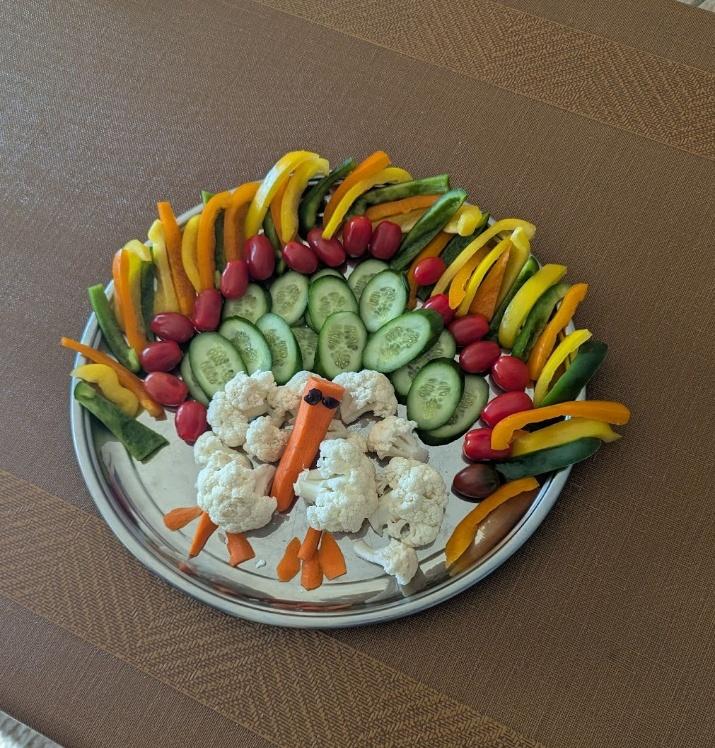
Since drawing this parallel, a question kept arising for me: what other aspects of premodern Japan might bear a resemblance to the contemporary United States, or, more directly, to my life? Over the rest of the semester, two themes stood out as possible answers to this question.
First, the significance found in cooking is a recurring theme across eras of Japanese history. In the Nihon ryoiki, for one, Japan’s oldest collection of Buddhist didactic stories, Chapter 1:13 tells the story of an impoverished woman. She had no food with which to feed her children, but would gather herbs when she went out, and “when she had gathered a mess of herbs, she would call her children, have them sit up straight, and remind them, ‘Eat this food reverently!’” (Kyōkai). Here, the actual food is irrelevant; it deserves to be revered, according to the story, not because of what it is but because of the attention that went into preparing it. Set a millennium later, Azby Brown’s book Just Enough, which depicts Edo life from the lens of a contemporary observer, paints a similar scene. The narrator reflects, “[Edo] cuisine involves utilizing food resources, taking advantage of what is available and turning it into something to celebrate” (Brown, pg. 160).
Most notably, in Instructions for the Zen Cook, Dōgen pitches a worldview based around an extension of the aforementioned Nihon ryoiki story—that because the herbs were gathered with care, they should be eaten reverently. According to Dōgen, a tenzo—the monk who prepares the meals for the monastery— “should handle all food he receives with respect, as if it were to be used in a meal for the emperor,” and that he should “maintain an attitude that tries to build great temples from ordinary greens” (Dōgen, pg. 4, 7). The path to Zen, Dōgen believes, lies not in striving for better ingredients or in complaining about their quality, but rather in learning to respect them (and ultimately our circumstances and ourselves) for what they are. He also fixates on the tenzo being present, not complacent, to the degree of counting individual grains of rice (Dōgen, pg. 6). While likely hyperbole, directives like this emphasize that in the process of creating a meal, in putting sincere care and attention into it, the tenzo is strengthening his bond with the Buddha. Indeed, when Dōgen suggests that he can “[expound] the budhadharma through the most trivial activity,” he surpasses the notion of finding significance in food to that of finding spirituality in it (Dōgen, pg. 7).
Second, while a less prevalent theme, strict gender roles remain fairly consistent in texts across historical eras. The Kojiki, a sacred text of Shintoism and the first written record in Japan, lays an early precedent: women deserve some agency, though not equal to that of men. In the Kojiki, when Izanaki and Izanami—the Inviting Male Deity and Inviting Female Deity—descend from heaven, Izanaki asks for consent before they mate in the holy bed. Thus, Izanami has some level of agency. On the other hand, their first two children were born severely malformed solely because Izanami spoke first during the mating ritual, thus placing Izanami beneath Izanaki (Danno, pg. 15-16).
The world’s first novel, The Tale of Genji, provides similarly mixed messages. Several scholars have argued that the story, written by Murasaki Shikibu, a lady-in-waiting at the Heian-era imperial court, is fundamentally feminist, as its female characters showcase
significant agency, independence, and emotional complexity (Shitya Post). At the same time, the gender dynamics in the story are harsh—and accurate to the time (Tyler). As many readers contend, Genji, the radiant-prince protagonist, gets away with serial rape, and he states that the wife he’d love dearly is one which he “could mold to fit my ideal” (Shikibu, “Yūgao,” pg. 89). Though taking place centuries later, the Edo-period film Life of Oharu portrays a kindred gender hierarchy, in which the lives of women are heavily regulated by men, not to mention by both men and women of higher status (Mizoguchi).
Given this recurring theme, I was particularly intrigued by the contemporary film A Boy and His Samurai, in which a samurai prays for a job and is transported through time to modern Japan. The film acknowledges that women in modern Japan have more agency than in previous eras, with Kijima—the Samurai—needing to significantly adapt his understanding of a woman’s role in society to his new environment. That said, the film largely seems to be a critique of gender inequality in modern Japan. There are numerous parallels, for instance, between Kijima and the ex-husband of Hiroko, the film’s heroine. Both men start by accepting Hiroko’s desire to
be in the workforce, but they’re unwilling to sacrifice any of their own ambitions, and ultimately suggest they be the breadwinner while Hiroko stays home and cares for her son (Nakamura). By mirroring the behavior of Edo and Tokyo men, the film suggests that expectations of women in Japan are not much different in the modern era than they were in pre-modern times.
Given these themes, I’m left with two more actionable guiding questions. First, does the significance or spirituality found in preparing food throughout Japanese history translate to the contemporary United States? Second, in my family—because for this question, my family is less representative of the country—to what extent do traditional gender roles still persist? Through these questions, I hope that viewing the respective themes in a more relatable context will help me better understand those themes and their manifestations across cultures and time.
The Concept and The Rules
There seems to be no better time to answer these questions than Thanksgiving, a quintessentially American holiday designed around family and preparing and eating food. This year, I’ll celebrate the holiday at my grandparents’ apartment in New York; it will be a small gathering of myself; my parents; my younger sister and brother; and my grandparents, Mima and Poppy.
Throughout Thanksgiving Day, I will make frequent journal entries, primarily focusing on whether for anyone in my family, preparing the holiday meal is, in itself, significant. This is hard to quantify, but Dōgen gives sufficient examples for how people “find significance in preparing a meal” for me to attempt to document it. Further, I will keep track of the different
tasks completed by the women and by the men in my family to assess how, if at all, traditional gender roles are followed in preparing the meal.
Moreover, I intend to write my journal entries loosely in the zuihitsu style of Sei Shōnagon’s The Pillow Book, and, returning to the original impetus for this project, Kenkō’s Essays in Idleness. Doing so will both provide me with a basic structure for my entries and, ideally, allow me to better appreciate two of my favorite authors from the semester. I particularly appreciated these authors because their writing style felt personal and conversational; this tone feels especially apt for a project in which I’m seeking personal connections to Japanese cultural themes.
Specifically, the elements of Shōnagon and Kenkō’s writing styles that I plan to emulate are as follows:
1. Zuihitsu: Most importantly, The Pillow Book and Essays in Idleness are the defining texts of the zuihitsu style. Originating with The Pillow Book in the 11th century, zuihitsu can be translated as “following the brush” (“Zuihitsu”). A genre with no clear western counterpart (Keene, Seeds in the Heart), it consists of a seemingly random “jumble of anecdotes, homilies, opinion pieces, reminiscences, and even a few lists” (Carter, pg. 3). The mini-essays are not necessarily chronological, and they don’t tell a coherent story together. However, because the form is, in effect, formless, the author writes however they want about whatever they want, helping the author’s personality come through to the viewer. As such, over Thanksgiving, I will “[jot] down at random the idle thoughts that cross my mind” (Kenkō and Chōmei, Preface, pg. 28). This is the most important element that I’ll be emulating.
2. Aesthetics and Yūgen: Both writers were keen to address the aesthetics of their surroundings and were particularly fond of the aesthetics of imperfection. They often thought older, incomplete, or weathered objects and landscapes—such as a slightly-clouded Chinese mirror, which “makes [Sei Shōnagon’s] heart beat fast” (Shōnagon, ch. 26, pg. 30)—were more pleasant than their “perfect” counterparts (Saito). Encapsulating this idea in one of my favorite passages of his, Kenkō writes,
Should we look at the spring blossoms only in full flower, or the moon only when cloudless and clear? To long for the moon with the rain before you, or to lie curtained in your room while the spring passes unseen, is yet more poignant and deeply moving….Could poems on the themes of “Going to view the blossoms to find them already fallen” or “Written when I was prevented from going to see the flowers” be deemed inferior to “On seeing the blossoms?” It is natural human feeling to yearn over the falling blossoms and the setting moon… (Kenkō and Chōmei, ch. 137, pg. 61).
In a word, the authors appreciate yūgen, the beauty that we can sense in an object, but which can’t be seen directly. When we see a barren rose bush, for instance, there is limited superficial beauty, but the latent beauty, or the beauty that remains hidden, is immense (“Yūgen”; Moore). My aesthetic tastes won’t directly match either of the authors, of course, but I will attempt to comment on aesthetics in my mini-essays, specifically attempting to focus on yūgen and the aesthetics of imperfection.
3. Allusions and References: Shōnagon and Kenkō both include references to earlier texts. The former, for instance, includes “The Man’yōshū [and the] Kokinshū” in a short list titled “poetic anthologies” (Shōnagon, ch. 65, pg. 59). Kenkō, meanwhile, references Buddhist texts and The Pillow Book, acknowledging when one chapter’s ideas copy Shōnagon’s (Kenkō and Chōmei, ch. 19, pg. 32). In part, these references are used to back up a point, to highlight the other author’s idea, or as a narrative device. That said, the references were also, at least in part, an attempt to showcase the writer’s education and intellect to the reader. Thus, whenever possible in my project, I plan to make allusions and references that unequivocally demonstrate my intellect.
4. Writing to Be Read: While they write in a personal, journal-like format, neither author is writing entirely for themselves. Shōnagon claimed that The Pillow Book was a private outlet that she accidentally left out on a cushion for a visiting guest, who carried it off despite her pleas. There’s ample evidence throughout the work, though, that Shōnagon was well-aware of her audience. She abstains from any soul searching, is less self-absorbed than your typical diarist, and, as mentioned, she heavily showcases her education (McKinney). And though Essays in Idleness was published posthumously, which could indicate that Kenkō didn’t intend for the essays to be published, many of the essays still feel intended for an audience. His bits of advice and gripes at the state of the world read as though he’s trying to persuade the reader, not himself. He also entered poetry contests at the imperial court before and after completing the essays comprising Essays in Idleness (“Yoshida Kenko”), suggesting a general desire to share his writing. Their reluctant pose, then, reflects social norms. Both writers, though more so for Shōnagon, had to contend with decorum of their times that saw bragging as uncouth behavior. Thus, even as they showed off their intellect, they also had to pretend as though they were writing privately. While I am not bound as much by such considerations, even in American culture, outright bragging is seen as gauche, so I will also attempt to emulate this delicate balancing. For my project, I’ll be aware that whatever I write will be read by Professor Watanabe and may even disseminate back to my family. The tone and content of my mini-essays will—even unconsciously—vary from how they would present themselves were I writing solely for myself, so I’ll naturally be mimicking this “writing-to-be-read” mentality.
Additionally, as a non-writing rule, I will only partially inform my family about this project in advance. If asked, I’ll provide the theme of finding significance in cooking as the sole center of the project and as my reason for making journal entries over Thanksgiving. I will refrain from sharing the second guiding theme—gender roles—to avoid accidentally skewing the data. As in, I hope to avoid the possibility of my family performing different tasks than they would otherwise because they knew I was keeping tally.
An Essays in Pillow Book Thanksgiving
Some of these essays have been edited from their original form for spelling, intelligibility, and narrative purposes. As mentioned above, the order they are displayed in is chosen, not chronological.
[1] Mima — Chopped up celery, carrots, and onions to go on the base of the turkey pan. Added home-made cornbread to store-bought stuffing. Cleaned the lettuce. Took out serving platters from the dining room cabinets. Set the table with Mom. Made hot apple cider. Seasoned turkey. Stuffed turkey.
[2] Poppy — Cleaned wine glasses.
[3] Every house should, for an hour on a sunny day, see its windows hit just right by sunlight. A frog from Mississippi once sat on a branch, pondering, yet proclaimed with confidence that “someday we’ll find it: The Rainbow Connection.” He’s probably right.
[4] Making the Nosh — Mima gets up to make a nosh. Mom offers to help, but Mima declines. “It’s a surprise,” Mima says.
[5] For the Pre-Meal Nosh, Mima enjoyed surprising everyone with a turkey-themed nosh platter, which she had been planning for a while and that took serious time to construct. Poppy helped her construct it.
[6] In a wooden bowl:
- 3 heads of lettuce—torn, never cut.
- 1 large whisked egg.
- 1 can of filleted anchovies—separate the anchovies from each other before adding, pour the oil from the can over the lettuce.
- Croutons—less than you think you need so that more can be added later.
- Grated pecorino romano (or aged Italian parmesan on special occasions)—more than you think you need.
- ~3 knife-tips of Coleman’s Dry Mustard Powder.
- Medium amount of olive oil—regular, never extra virgin.
- Add cheese; you didn’t add enough last time.
- Toss.
Mima’s caesar salad is a family tradition only a generation old. Decades ago, back when cookbooks were more than passive-aggressive holiday gifts, the recipe was adapted from a New York Times cookbook. It’s been perfected over the years. It’s the perfect dish, even though the recipe is vague. Most measurements above are estimates, but I don’t believe defined recipes ever taste as good.
[7] Matzo ball soup belongs at every special meal. It’s not inherently a Thanksgiving food, I acknowledge, but that’s not the point. It nonetheless feels warm and homey, refreshing and familiar, an homage to a culture long predating Thanksgiving. And, frankly, what could be more Thanksgiving than plopping balls of bread into an otherwise healthy dish?
[8] The Toast — The person who plays the biggest role in making the meal deserves to make the big Thanksgiving toast. Mima made a very nice toast today—L’chaim!
[9] My younger sister should stop asking if I’ve “found meaning” every time I write in this journal.
[10] Staples of Thanksgiving — Turkey, gravy, cranberry sauce, stuffing, entree for the carnivores who despise turkey, entree for the pescatarians, San Pellegrino Sparkling Water (green glass bottles), pie, people inexplicably obfuscating when credited for doing something. I mean, Mima spent the entire day cooking, and when someone tries complimenting her, she instead earnestly thanked everyone else for the 5-30 minutes that they chipped in for.
[11] Rhyme — At a smaller Thanksgiving, where fewer people abound, there’s a bit less activity, more sitting around. At a smaller Thanksgiving, there’s fewer chances to jaw, and you’re gradually left in silence, staring at your grandpa. Yet a larger Thanksgiving is a draining event, where I’m often left feeling incredibly spent. At a larger Thanksgiving, there’s more of a mess, and many more people, all asking, “How’s Wes?” (It’s real good, thanks for asking.) So a smaller Thanksgiving has its bonus, a real gravy train, if you will, because life has shown us…that quality time’s worth a mill (-ion bucks. It’s worth a lot).
[12] “I am grateful for…” speeches should be this heartfelt every year. This was beautiful, and otherwise what’s the point?
[13] Dad — Most of the clean-up, with help from Mima and Mom. Got some reading done before dinner.
[14] Mom — Helped throughout the day. Subjected to an hour-long befuddling presentation from my younger brother on the respective benefits and detriments of different smart watches.
[15] Poppy (cont.) — Carved the turkey. A big job, and the only chore of the day completed wholly by men. It is, indeed, the most classically chauvinistic event of the day by far, so not too much of a shocker that out of all the chores, Mima accepted help on this one. In fact, I can’t recall a Thanksgiving where a female family member has carved the turkey or even claims the ability to. Poppy, Grandpa, Uncle Ari, and Uncle Marc bear this burden every year.
Reflection
My fifteen mini-essays include everything from recipes and lists to what resembles rhyming poetry; I think that I successfully made liberal use of the zuihitsu format. I also, in #3, made a successful allusion to an outside text, namely Kermit the Frog’s “The Rainbow Connection.” Hopefully that reference, like the references of Shōnagon and Kenkō, demonstrates my intellect to the reader. If they don’t get it, their loss—as Shōnagon and Kenkō would have agreed. Similarly, I tried to mimic, to an extent, Shōnagon and Kenkō’s fairly opinionated tones. This tone is heavily foreign to my non-confrontational nature, and I think #8 and #12 were the closest to mimicking the tone—though they’re not all that close.
I also unconsciously emulate Kenkō’s appreciation for impermanence, in essay #3.
Building off of his appreciation for the aesthetics of imperfection and yūgen, Kenkō believed that “beauty is indissolubly bound to its perishability” (Keene, Essays in Idleness). Though interesting, I originally decided not to include this as a writing element to emulate; I was worried that adding many rules would limit my ability to write in the zuihitsu style, which necessitates creative freedom.
Additionally, as hoped, my family did not catch on to the fact I was observing the extent to which gender roles were followed throughout the day. As such, the chores people completed were uninfluenced by my experiment. (Unless, conceivably, I was subconsciously influenced by my own findings, affecting which and how many chores I volunteered to help with.)
Earlier this year, I completed a project in which I emulated the writing style—and to an extent the lifestyle—of consumptive Meiji-era haiku poet Masaoka Shiki. In comparison to that project, I found emulating the writing styles of Sei Shōnagon and Yoshida Kenkō relatively easy. In fairness, though, the environment of this project was less well-suited for writing haiku. For my last project, I was lying in my room, making it easy to concentrate on writing, whereas in this
project, I was writing my mini-essays whilst attempting to be present at the family gathering. I appreciated the leeway that zuihitsu allowed me, and I especially appreciated the ability to use outside references and humor, as Shiki largely rejected the use of allusions and wordplay (Watson, pg. 7). That said, at times I found myself missing the creative constraints of haiku—which was a substantial surprise.
While I am generally pleased with how the project itself went, there were several flaws. Firstly, there were elements of Shōnagon and Kenkō’s writing styles that I intended to emulate and largely was unsuccessful. I only make one reference to an outside text, for instance, and my only real commentaries on aesthetics lie in #3 and maybe #6. In part, I think I struggled to incorporate these elements because of my aforementioned prioritization of following the zuihitsu form. Because I was trying to transcribe the “idle thoughts that cross[ed] my mind” (Kenkō and Chōmei, Preface, pg. 28), I struggled with having anything that I was “expected” to write about.
Plus, as a less foreseeable flaw in the experiment, I failed to take into account my grandmother’s stubbornness as a hostess. Much more so than they are given credit for in my essays, my family members offered repeatedly to help Mima in the kitchen, but she typically insisted that she was “fine without help.” Therefore, the chores completed by each person, and by extension, each gender, may look different had Mima accepted more offers of help. Further, my grandfather wasn’t feeling his best Thanksgiving day, and thus may have completed less chores than he would have otherwise.
As to my guiding questions, I believe the significance found in preparing food absolutely translates to the contemporary U.S. For one, Mima was incredibly excited to reveal the
turkey-themed nosh mentioned in essays #4 and #5. Days in advance, when I asked her what she was making for Thanksgiving, she told me the dinner menu and added “but that doesn’t include
the surprise appetizer!” Here I see a direct parallel to Dōgen: just as my grandmother used the surprise appetizer as a way to brighten the relatively dull pre-meal hours for everyone, Dōgen viewed the tenzo as the person who “enables all the residents in the community to carry on…in the most stable way” (Dōgen, pg. 9). The caesar salad described in #6 is likewise a prime example. My grandmother has perfected her caesar to an unbelievable degree, yet she knows the recipe just by vibe. “About three knife-tips,” for instance, is not a reliable measuring system. My mom, a skilled cook herself, has endeavored to figure out the exact measurements for decades, to no avail. Indeed, nobody, even when directly copying Mima, can perfectly match her caesar.
Every time Mima makes the salad, then, is distinctly special. For Mima it’s special because of the attention she puts into preparing it and the time she’s spent perfecting the recipe, for everyone else it’s special because she’s the only one who can perfectly make it. The “beauty is indissolubly bound to its perishability” (Keene, Essays in Idleness).
Further, traditional gender roles were heavily followed. Mima did practically all of the cooking and general preparation for the meal, and most other advanced cooking was done by my mom and sister. In fairness, that doesn’t take into account Mima’s determination to do many tasks herself or that my brother is the only one of the four men present who’s particularly capable in the kitchen, whereas my sister, mother, and grandmother are all adept. (The latter fact alone, though, may suggest the extent to which traditional gender roles are followed in my family overall.) My brother, my dad, my grandfather, and myself all chipped in the kitchen, but we definitely had the most sitting-around time that day. As is written in #15, the only job completed entirely by men was carving the turkey. As Margaret Visser put it, “For thousands of years, [the roast beast] was placed before the family as a result of male enterprise and triumph; and men, with their knives, have insisted on carving it up” (Roth). In short, men only completed the most
chauvinistic event around (only masculine because of primeval associations very few urban men ever have experienced). The only real break from gender norms that I noticed—as described in #8—was that my grandmother, rather than my grandfather, made the big Thanksgiving toast at dinner. But more so than I expected, traditional gender roles were almost entirely followed, creating a surprising parallel to the persistence of expectations of women in modern Japan.
Finally, I found this experiment incredibly interesting. Emulating the writing style of Shōnagon and Kenkō has all the more made me appreciate their abilities to, through writing, indirectly convey their personalities to the reader. Further, I was surprised at how similarly prevalent the two themes I explored seem to be in the U.S. and Japan, and, certainly, I was able to better understand these themes by viewing them in more relatable packaging.
Bibliography
- Brown, Azby. Just Enough: Lessons from Japan for Sustainable Living, Architecture, and Design. Stone Bridge Press, 2022.
- Carter, Steven D. The Columbia Anthology of Japanese Essays. Columbia University Press, 2014.
- Danno, Yoko. “The Male Deity Izanaki and the Female Deity Izanami.” Songs and Stories of the Kojiki, by Ō no Yasumaro, 2022.
- Dōgen. Instructions for the Zen Cook. Translated by Thomas Wright, Shambhala, 2005.
- English Shitya Post. ““The Tale of Genji” : A Trailblazer for Gender Empowerment.” English – Shitya Post, 25 6 2023,
https://english.sahityapost.com/the-tale-of-genji-a-trailblazer-for-gender-empowerment/.
Accessed 5 12 2025. - Keene, Donald. “Kojiki | Mythology, Shintoism, Creation Stories.” Britannica,
https://www.britannica.com/topic/Kojiki. Accessed 5 December 2025. - Keene, Donald. “Preface.” Essays in Idleness: The Tsurezuregusa of Kenkō, by Yoshida Kenkō, translated by Donald Keene, Columbia University Press, 1998.
- Keene, Donald. Seeds in the Heart. Columbia University Press, 1999.
- Kenkō, Yoshida, and Kamo No Chōmei. Essays in Idleness and Hōjōki. Translated by Meredith McKinney, Penguin Classics, 2013.
- KyōKai. The Nihon ryōiki. Translated by Burton Watson.
- McKinney, Meredith. “The Pillow Book: Translating a Classic.” Kyoto Journal, 2011. Kyoto Journal, https://kyotojournal.org/in-translation/on-translating-a-classic/. Accessed 5 12 2025.
- Mizoguchi, Kenji, director. Life of Oharu. 1952.
- Moore, Evelyn. “Aesthetic Records: A Comparison of Max Frisch’s “Tagebuch 1946-1949” and the Diary of Kenkō, Essays in Idleness.” Comparative Literature Studies, vol. 25, no. 2, 1988. JSTOR,
https://www.jstor.org/stable/40246530?searchText=essays+in+idleness+kenko&searchUri=%2Faction%2FdoBasicSearch%3FQuery%3Dessays%2Bin%2Bidleness%2Bkenko%26so%3Drel&ab_segments=0%2Fspellcheck_basic_search%2Fcontrol&refreqid=fastly-de fault%3Ae590a00b1d4d8c021d. Accessed 5 12 2025. - Nakamura, Yoshihiro, director. A Boy and His Samurai. 2010.
- Roth, LuAnne. “Sexing the Turkey: Gender Politics and the Construction of Sexuality at Thanksgiving.” Unsettling Assumptions: Tradition, Gender, Drag, University Press of Colorado, Utah University Press, 2014, p. 150.
- Saito, Yuriko. “The Japanese Aesthetics of Imperfection and Insufficiency.” The Journal of Aesthetics and Art Criticism, vol. 55, no. 4, 1997. JSTOR, https://www.jstor.org/stable/430925?searchText=essays+in+idleness+kenko&searchUri=%2Faction%2FdoBasicSearch%3FQuery%3Dessays%2Bin%2Bidleness%2Bkenko%26so%3Drel&ab_segments=0%2Fspellcheck_basic_search%2Fcontrol&refreqid=fastly-default%3A58d8e518221184cb8ce1. Accessed 5 12 2025.
- Shiki, Masaoka. Masaoka Shiki: Selected Poems. Translated by Burton Watson, Columbia University Press, 1997.
- Shikibu, Murasaki. “Yūgao.” The Tale of Genji, ~1021, p. 89.
- Shōnagon, Sei. The Pillow Book. 1002.
- Tyler, Royall. “Marriage, Rank, and Rape in the Tale of Genji.” Intersections: Gender, History and Culture in the Asian Context, no. 7, 2002.
- “Yoshida Kenko.” New World Encyclopedia, https://www.newworldencyclopedia.org/entry/Yoshida_Kenko. Accessed 5 December 2025.
- “Yūgen / Japanese Aesthetic Sense -ART NOMURA-.” art nomura, https://nomurakakejiku.com/lesson_lineup/yuugen. Accessed 5 December 2025.
- “Zuihitsu.” Poetry Foundation, https://www.poetryfoundation.org/education/glossary/zuihitsu.
Accessed 5 December 2025.

