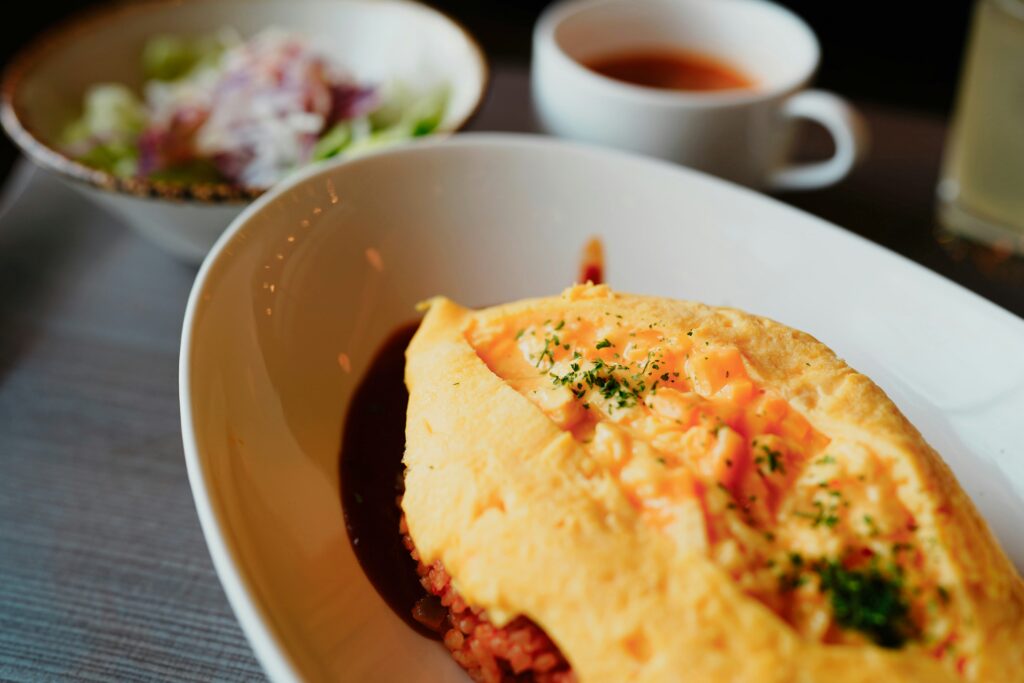
That Perfect Omuraisu
That Perfect Omuraisu XinHao Shi – 2026 I built this project around a simple, almost stubborn question: why does omuraisu
That Perfect Omuraisu XinHao Shi – 2026 I built this project around a simple, almost stubborn question: why does omuraisu

The conception of this project started as a singular thought experiment: what would Tampopo look like if they made it in the United States? Tampopo, created in 1986 by Japanese director, Juzo Itami, is a beloved film that showcased to the Western-world Japanese food. Utilising this food, it also offers a satiric cultural commentary of Japan at the time, with the film addressing larger critiques on topics such as feminism, class, traditionalism, consumer culture, and capitalism. Having watched this film several times and deeply enjoying it, I began to wonder what such a film would look like if made to reflect modern-day America. Thus, what started as a simple thought experiment transformed into a complicated project that explored my relationship to food in several different roles as a filmmaker, anthropologist, college student, and Asian American. Through using these multiple lenses of identity, I was able to create a unique experience to encapsulate some of the various themes found throughout the movie.

The eyes feast before the stomach” and “eating with your eyes” express the phenomenon of seeing the visual appeal of a food as an indicator for taste. As such, scenes within film depicting and emphasizing a dish or a meal can cause the audience to salivate and long to experience the dish being presented without any of the other sensory input included. Japanese cuisine depicted within film usually gets this reaction. However, the depictions of food within anime has built a mass fanbase that has skyrocketed intrigue towards and popularity of Japanese cuisine amongst Gen Z, Millennials, or anyone who has been graced with watching a Ghibli movie. Studio Ghibli’s distinct stylization of food has left many scrambling to recreate and learn about the cuisine presented, from the domestic Howl’s Moving Castle’s cast iron eggs and bacon to the extravagant tables of various dishes in Spirited Away.

Longing for the Simple Life: Buddhist Cuisine in East Asia as Ethical and Aesthetic Ella Biehn – April 2021 In

Changing Perceptions: How Wakako zake is Fixing Gender Stereotypes in Anime Shakeel Jessa – December 2020 Introduction: To begin a